

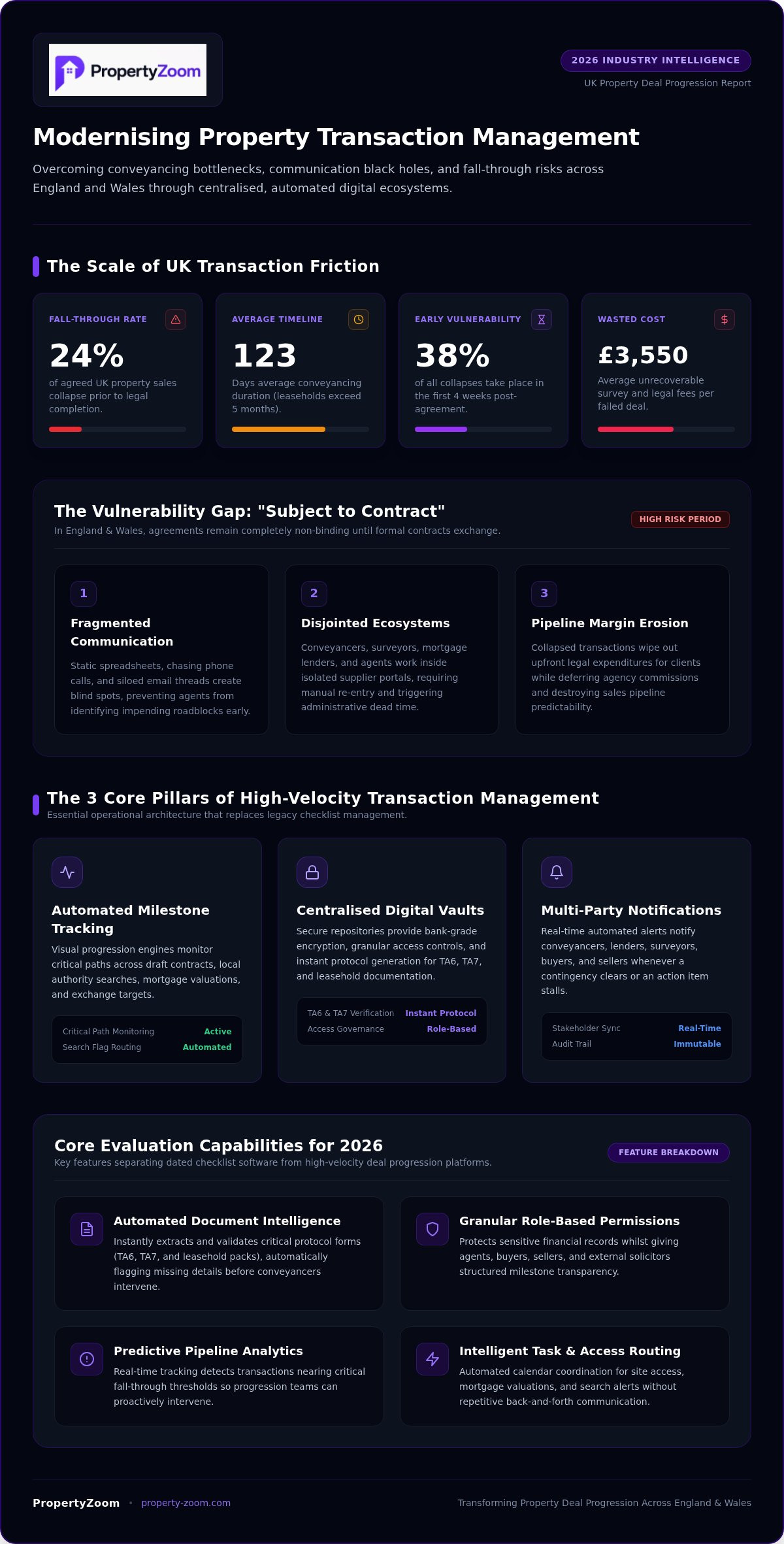
Nearly 24% of agreed UK property sales collapse before completion, with the average conveyancing timeline now stretching to 123 days across England and Wales. If you manage property transactions, you know the daily friction all too well: chasing solicitors for basic updates, juggling disjointed spreadsheets, and watching preventable communication black holes threaten your pipeline. Deploying an integrated property transaction management platform has become essential to rescue deal momentum and protect agency margins.
You shouldn't have to lose valuable instructions to administrative chaos or radio silence between third parties. In this 2026 guide, discover how modern property transaction management platforms eliminate administrative bottlenecks, unify conveyancing and surveying workflows, and accelerate completion times. We examine the core platform features, current compliance standards, and smart deal-flow strategies built to deliver a transparent, high-velocity experience from accepted offer right through to final completion.
Key Takeaways
- Discover how adopting a dedicated property transaction management platform unifies disparate communication channels, documents, and stakeholders into a single operational hub.
- Identify essential software capabilities for 2026, including automated document verification, upfront compliance data collation, and digital identity checks.
- Learn how transparent milestone tracking across conveyancers, surveyors, and lenders eliminates administrative dead time and mitigates deal collapse.
- Master a structured, step-by-step implementation framework to migrate active pipelines smoothly without disrupting pending legal exchanges.
- Explore how connecting property discovery, instant valuations, and professional services within an AI-powered ecosystem drives faster completions and protects commission revenue.
What Is a Property Transaction Management Platform?
A modern property transaction management platform is centralised software that coordinates every stage of a property sale from offer acceptance through to completion. Legacy deal progression often treats transaction management merely as a digital filing cabinet or basic task checklist. In contrast, modern solutions orchestrate actions across disparate parties, uniting estate agents, conveyancers, mortgage lenders, surveyors, buyers, and sellers inside a singular digital command centre.
Traditional deal progression relies on static spreadsheets, fragmented email threads, and phone calls. This fragmented model breaks down quickly when parties operate across different systems. By centralising transaction infrastructure through property technology (PropTech), platforms replace disconnected status updates with structured data pipelines, automated task handoffs, and immutable audit trails that record every document exchange and milestone sign-off.
The Core Components of Modern Deal Management
Effective transaction platforms eliminate administrative friction by anchoring the workflow around three primary pillars:
- Automated milestone tracking: Visual progression engines monitor critical paths across draft contracts, local authority searches, mortgage valuations, and exchange targets.
- Centralised digital vaults: Secure document repositories provide bank-grade encryption, granular access controls, and instant protocol generation for items like property information forms.
- Multi-party notifications: Real-time alerts automatically notify all relevant stakeholders whenever a contingency clears or an action item stalls.
Why Traditional Transaction Coordination Fails in 2026
The English and Welsh legal requirement of "Subject to Contract" means deals remain non-binding until contracts formally exchange. Average conveyancing timelines now average 123 days, with complex leaseholds stretching past five months. This protracted exposure period breeds uncertainty. In fact, 38% of transaction collapses occur within the first four weeks of agreeing a sale.
When communication breaks down across siloed email chains, neither the agent nor the investor can spot impending roadblocks. Fragmented communication channels remain the single largest contributor to avoidable property transaction collapses. Each failure carries severe repercussions: failed sales cost individual parties an average of £3,550 in unrecoverable survey and legal fees, while draining pipeline momentum and deferring earned agency commissions.
Key Features to Evaluate in Transaction Management Software
Legacy tools treat transaction coordination as passive back-office record keeping. In contrast, a modern property transaction management platform functions as an active deal engine. To separate dated checklist software from high-velocity platforms, look for systems that automate pipeline progression and compress transaction cycles.
A competitive evaluation framework prioritises three core operational capabilities:
- Automated document intelligence: Instant extraction and validation of critical forms, including TA6, TA7, and leasehold documentation, flagging missing details before solicitors intervene.
- Granular role-based permissions: Tailored access levels protecting sensitive financial records whilst allowing agents, buyers, sellers, and external solicitors to review relevant deal milestones.
- Predictive pipeline analytics: Real-time tracking that flags transactions approaching critical fall-through thresholds so teams can intervene early.
Automation, AI, and Intelligent Task Routing
Automated workflow engines prevent pipeline stalls by instantly generating conditional tasks. When a local authority search reveals an unexpected planning constraint, the platform routes alerts to the assigned conveyancer immediately. Conversational AI assistants field routine client updates about exchange dates, while automated calendars coordinate site access for surveying and mortgage valuations without endless back-and-forth emails.
Integrated Professional Ecosystems vs Standalone Tools
Standalone checklist applications force teams to re-enter data into external supplier portals, creating operational friction. Leading platforms unify surveying, mortgage arrangement, and legal conveyancing inside a single workspace. Exploring how to streamline the property buying process reveals that native professional integration reduces handoff errors significantly. Choosing PropertyZoom's connected workspace allows brokerages to manage these essential services centrally whilst unlocking seamless client tracking.
Security, Compliance, and Data Governance
Upfront compliance is now mandatory under recent regulatory shifts. Transaction software must align directly with HM Land Registry's digital property market strategy by supporting biometric identity verification and automated Anti-Money Laundering (AML) checks. Platforms incorporating NFC cryptographic chip scans paired with Open Banking source-of-funds checks meet HM Land Registry Safe Harbour standards, securing tamper-proof audit trails and bulletproof GDPR compliance.
Overcoming Conveyancing Delays and Fall-Through Risks
Transaction drag rarely stems from lack of effort. It happens because critical deal information remains trapped behind administrative silos. While general market commentary focuses on interest rates or buyer sentiment, operational stalls occur when conveyancers wait days for replies to standard enquiries or when unexpected defects surface late. Deploying an intelligent property transaction management platform dismantles this information asymmetry, establishing a shared source of truth across all parties.
Accelerating the Legal Conveyancing Workflow
Conveyancer capacity in England and Wales has contracted, with practising residential solicitors falling below 11,000 across fewer than 6,000 firms. This deficit makes automated workflow tools essential. Pre-populating digital property packs upfront cuts weeks of enquiries before contracts reach buyer solicitors. Legal teams operating inside a unified workspace exchange title notes, confirm protocol forms, and agree draft contracts collaboratively rather than waiting for posted documents.
Preventing Mortgage and Surveying Stalls
Survey defects trigger 37.5% of collapsed transactions, making structural discoveries the single largest cause of aborted sales. When platforms upload digital surveying reports directly into the deal room, buyers and sellers negotiate repair allowances or price amendments immediately. Similarly, accessing instant property valuation online data early allows teams to anticipate lender appraisals, preventing down-valuation shocks that derail mortgage underwriting weeks into the legal process.
Chain Management and Transparency for Investors
Chains compound transaction risk exponentially. A delay three links down the chain can sink an otherwise ready sale. Modern platforms deploy visual dependency maps that track every connected transaction simultaneously, alerting deal coordinators whenever an upstream search or mortgage offer stalls. Firms reviewing Law Society guidance on building a digitalisation roadmap recognise that transparent milestone management prevents administrative blind spots.
Automated client alerts eradicate repetitive status-chasing calls, freeing negotiators to focus on closing. Real-time milestone visibility across legal and lending partners cuts fall-through probability significantly whilst protecting pipeline revenue. The result is a resilient pipeline that moves quickly from accepted offer to exchange.
How to Implement a Transaction Management Platform Across Your Organisation
Rolling out new deal-flow software doesn't require grinding active sales to a halt. Successfully deploying an enterprise property transaction management platform follows five structured stages:
- Audit your pipeline: Map current administrative bottlenecks and quantify hours lost to manual chasing.
- Consolidate active deal records: Migrate live transactions systematically without disrupting imminent exchange dates.
- Connect professional partners: Onboard panel conveyancers, qualified surveyors, and mortgage intermediaries into shared workspaces.
- Configure automation triggers: Set up rules for milestone alerts, task handoffs, and upfront document validation.
- Establish team operating standards: Train negotiators to run daily deal reviews directly from real-time pipeline dashboards.
Pipeline Auditing and Tool Rationalisation
Begin by mapping every administrative touchpoint between offer acceptance and key handover. Calculate the hours negotiators spend drafting routine update emails, tracking down survey reports, and compiling status notes. Most brokerages uncover an expensive sprawl of single-purpose apps, shared inboxes, and spreadsheets. Retiring these redundant point tools cuts software overhead immediately whilst removing data discrepancies between teams.
Onboarding Legal Partners, Surveyors, and Lenders
External adoption determines platform success. Modern platforms provide frictionless collaborator portals that require zero complex software installations for solicitors or mortgage brokers. Establish clear service level expectations around milestone updates, enquiry turnarounds, and document uploads. Partner firms readily adopt portals when they experience faster file progression and reduced phone interruptions. To modernise your pipeline operations today, explore PropertyZoom's transaction ecosystem and connect your complete professional network.
Measuring ROI and Team Performance Post-Deployment
Evaluate your deployment against concrete performance metrics: offer-to-exchange timelines, overall pipeline conversion rates, and administrative hours saved per transaction. Track client satisfaction ratings across vendors, buyers, and investors who benefit from transparent progress tracking. Use built-in pipeline bottleneck analytics to pinpoint exactly where enquiries or mortgage underwriting slow down, refining your automated triggers to keep deal velocity consistently high.
Why PropertyZoom Delivers the Next Generation of Transaction Management
Most software in this sector stops at post-offer tracking. PropertyZoom approaches deal flow differently. Powered by proprietary ZEBA AI infrastructure, PropertyZoom bridges the gap between upfront sourcing and legal completion. Instead of forcing teams to import properties into a detached property transaction management platform, our ecosystem unites discovery, valuation, and transaction execution under one roof.
The platform eliminates the typical handoff friction that stalls transactions. Brokerages, investors, and clients operate within a connected environment featuring native access to legal conveyancing, surveying, and mortgages, ensuring transactions maintain rapid momentum from day one.
A Fully Integrated Ecosystem from Search to Completion
Smarter deal flow begins before an offer is even accepted. Investors and buyers discover opportunities using our conversational AI property search platform, validating viable opportunities instantly with built-in AI valuations and investment scores. When terms are agreed, those data points transition directly into live transaction milestones. The architecture natively supports varied portfolios, spanning standard residential property, student accommodation, land, and commercial assets.
Automated Communication Powered by Zeba Calls AI
Routine phone interruptions drain hours from agency schedules. PropertyZoom incorporates Zeba Calls AI to handle routine stakeholder interactions automatically. Inbound calls regarding progression updates, viewing arrangements, and surveyor site access are resolved intelligently without manual intervention. Integrated calendar synchronisation books access slots instantly, allowing deal coordinators to focus on complex title resolutions rather than administrative phone tag.
Driving Profitable, Predictable Deal Flow
Relying on fragmented third-party software creates blind spots that compromise fee pipelines. PropertyZoom provides an integrated, high-velocity alternative. By centralising upfront discovery, automated stakeholder communications, and integrated professional services, the platform converts unpredictable sales chains into clear, reliable milestones. Take control of your deal pipeline today with PropertyZoom.
Transform Your Deal Progression and Protect Pipeline Revenue
Manual deal coordination is no longer sustainable when client expectations demand rapid turnaround. Transitioning your pipeline onto an intelligent property transaction management platform unifies fractured communications, automates milestone oversight, and prevents avoidable deal collapse.
PropertyZoom delivers this operational agility through proprietary ZEBA AI infrastructure, giving teams real-time deal intelligence across residential sales, commercial assets, land, and student accommodation. With native integrations covering legal conveyancing, surveying, and mortgages, you eliminate communication friction between third parties and keep transactions moving smoothly toward completion.
Don't let administrative bottlenecks erode your commission margins or stall valuable investments. Streamline your property transactions with PropertyZoom and give your clients the transparent, modern experience high-performing deal flow demands.
Frequently Asked Questions
What is a property transaction management platform?
A property transaction management platform is specialised software that centralises and automates the progression of real estate sales from offer acceptance through to legal completion. It replaces disconnected email threads and manual spreadsheets with a collaborative digital workspace. By connecting estate agents, conveyancers, mortgage lenders, surveyors, and clients, the platform provides automated milestone tracking, encrypted document storage, and complete pipeline visibility.
How does transaction management software reduce deal fall-through rates?
Transaction software reduces fall-throughs by resolving administrative delays and communication blind spots early. Automated reminders ensure legal enquiries, survey bookings, and mortgage approvals progress concurrently rather than sequentially. With real-time milestone tracking, agents detect stalled actions immediately, allowing them to resolve title issues, property defects, or lending questions before buyers or vendors become frustrated and withdraw.
Can external conveyancers and mortgage brokers access the platform?
Yes, modern platforms include secure, role-based collaborator portals designed for third-party professionals. External conveyancers, independent surveyors, and mortgage brokers log into browser-based workspaces without complex local software installations. They upload reports, confirm completed milestones, and resolve enquiries directly within the file, ensuring all parties stay aligned without constant chasing.
Is property transaction software compliant with UK AML and GDPR regulations?
Leading platforms incorporate biometric identity checks, cryptographic passport verification, and Open Banking source-of-funds validation to meet HM Land Registry Safe Harbour standards. All sensitive personal, title, and financial documentation is encrypted at rest and in transit using bank-grade protocols, ensuring complete adherence to UK GDPR and statutory Anti-Money Laundering mandates.
How long does it take to implement a modern transaction platform?
Most agencies and investment firms complete rollout within two to four weeks. The process begins with auditing current pipelines and mapping milestone stages. Once workflow rules and document templates are configured, teams can onboard active cases in phases, migrating new sales agreements first to prevent disruption to deals approaching immediate exchange.
How does AI enhance real estate transaction management?
AI automates repetitive coordination tasks that traditionally drain administrative resources. Intelligent engines extract and validate information from property forms, flag missing compliance certificates, and generate instant property valuations. Tools like PropertyZoom's Zeba Calls AI handle inbound phone queries and coordinate viewing or survey appointments, allowing deal coordinators to focus on negotiations.
What is the difference between an estate agency CRM and a transaction management platform?
An estate agency CRM focuses primarily on front-end lead generation, marketing properties, managing applicant databases, and booking initial viewings. A dedicated property transaction management platform takes over once an offer is accepted. It orchestrates the complex post-offer legal and financial milestones required to progress a sale through conveyancing, surveying, and mortgage approval to legal completion.


